
Every industrial chemist and engineer working with phosphate esters eventually asks this question — will my phosphate ester remain stable over time? The answer depends on temperature, storage conditions, and formulation chemistry.
Yes, phosphate esters do degrade over time due to hydrolysis, oxidation, or thermal stress — but their stability can be extended for years with proper formulation, material selection, and storage control.
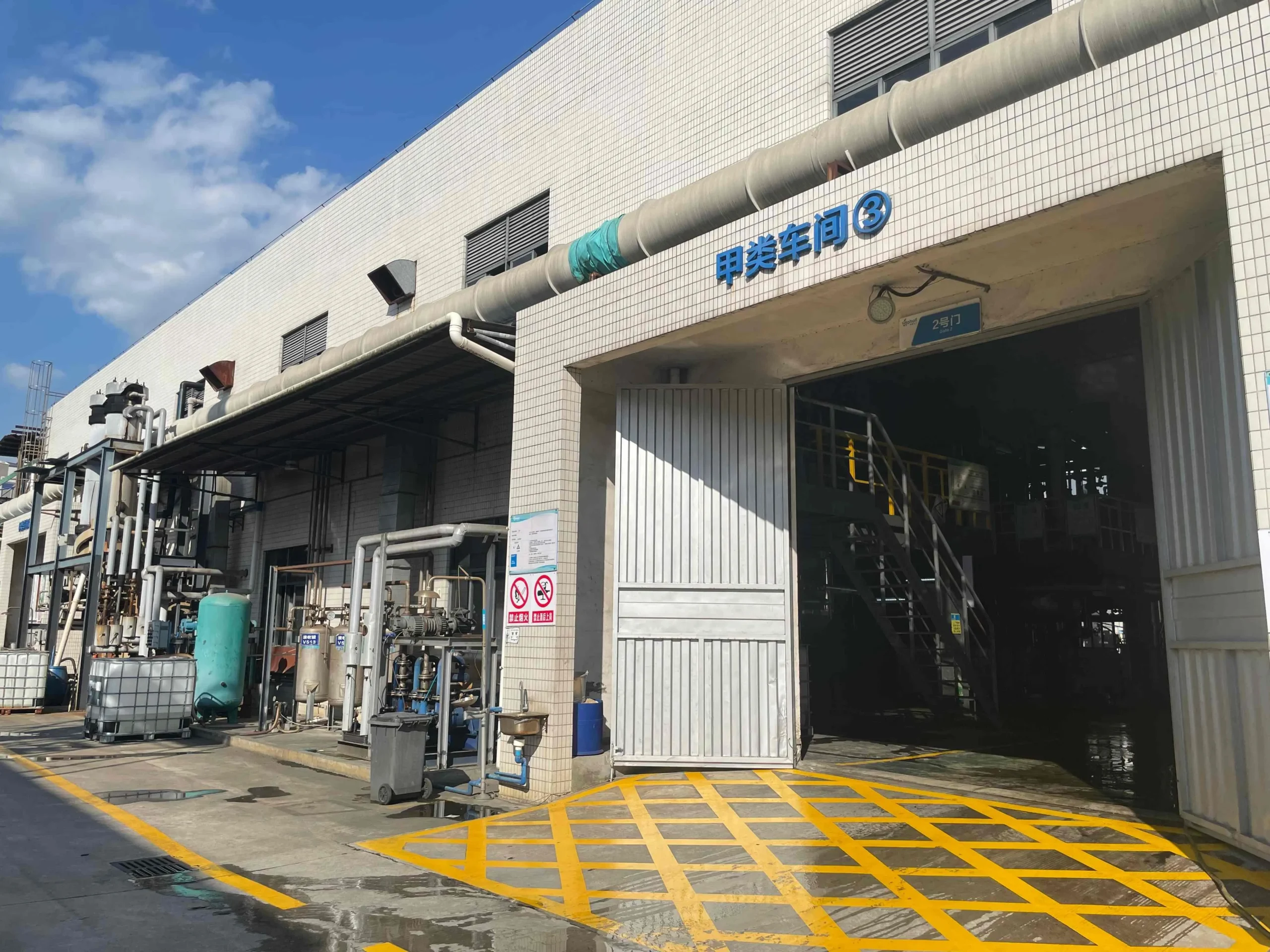
Let’s explore how and why degradation occurs, what factors accelerate it, and how modern stabilizers and technologies help phosphate esters maintain long-term performance in industrial environments.
1. Why Understanding Degradation Matters
Phosphate esters are used in critical systems — hydraulic fluids, lubricants, flame retardants, surfactants, and coatings.
In these environments, stability isn’t optional; it’s essential.
If a phosphate ester breaks down:
- Its acid value rises, leading to metal corrosion.
- Its viscosity changes, affecting flow and lubrication.
- Its phosphorus content decreases, reducing flame retardancy.
- Deposits or emulsions can form, blocking filters and nozzles.
Understanding degradation means you can prevent system failures, extend equipment life, and ensure safety compliance.
2. The Three Main Pathways of Phosphate Ester Degradation
a. Hydrolysis — The Most Common Form
Phosphate esters are prone to hydrolysis, where water breaks the ester bond, forming phosphoric acid and alcohol.
(RO)_3PO + H_2O → (RO)_2PO(OH) + ROH
What triggers it:
- Moisture contamination
- High temperature or pressure
- Acidic or alkaline conditions
Symptoms:
- Increasing acid value
- Formation of free alcohols
- Corrosion of metallic components
Prevention:
Use acid scavengers, moisture-tight packaging, and stabilized formulations cURL Too many subrequests.
cURL Too many subrequests.
cURL Too many subrequests.
cURL Too many subrequests.
- cURL Too many subrequests.
- cURL Too many subrequests.
- cURL Too many subrequests.
Prevention:
cURL Too many subrequests. cURL Too many subrequests. cURL Too many subrequests.

cURL Too many subrequests.
cURL Too many subrequests. cURL Too many subrequests., cURL Too many subrequests.
cURL Too many subrequests.
- cURL Too many subrequests.
- cURL Too many subrequests.
Symptoms:
- cURL Too many subrequests.
- cURL Too many subrequests.
- Deposits or varnish on metal surfaces
Prevention:
Use triaryl or polymeric phosphate esters, which have stronger P–O–C bonds and higher resistance to thermal cracking.
3. Comparing Stability Among Phosphate Ester Types
Not all phosphate esters degrade at the same rate — their structure determines their resistance.
| Phosphate Ester Type | Hydrolytic Stability | Oxidative Stability | Thermal Stability | Expected Shelf Life* |
|---|---|---|---|---|
| Triaryl (TCP, TPP, IPPP) | Excellent | Excellent | Excellent | 3–5 years |
| Trialkyl (TBP, TEHP, TEP) | Moderate | Moderate | Fair | 2–3 years |
| Alkyl Aryl (BPP, IPPP variants) | Good | Good | Good | 3–4 years |
| አሲድ ፎስፌት ኢስተር | Fair | Poor | Poor | 1–2 years |
| Polymeric / Bio-based Esters | Excellent | Very Good | Excellent | 5+ years |
*Under sealed, dry storage at 25°C.
Key takeaway:
The more aromatic (triaryl) and polymeric the ester, the more stable it is. Trialkyl and acid esters, while reactive and useful, require more careful handling.
4. Environmental and Storage Factors That Accelerate Degradation
Even a stable phosphate ester can degrade if the storage or application environment is poor.
a. Temperature
Each 10°C increase doubles the hydrolysis rate.
Storage tip: Keep containers below 35°C and avoid direct sunlight.
b. Moisture
Water is the most destructive factor.
Storage tip: Use moisture-proof drums, nitrogen blankets, and desiccant controls.
c. pH Extremes
Both acidic and alkaline environments catalyze hydrolysis.
Storage tip: Maintain near-neutral conditions (pH 6–8).
d. Metal Catalysts
Metal surfaces like copper or zinc accelerate oxidation and hydrolysis.
Storage tip: Use stainless steel (316L) or lined containers and pumps.
e. Air Exposure
Continuous contact with air or oxygen promotes oxidation.
Storage tip: cURL Too many subrequests.
cURL Too many subrequests.
cURL Too many subrequests.
cURL Too many subrequests.
- cURL Too many subrequests. cURL Too many subrequests.
- cURL Too many subrequests. cURL Too many subrequests.
- cURL Too many subrequests. cURL Too many subrequests.
- cURL Too many subrequests. cURL Too many subrequests.
cURL Too many subrequests.
- cURL Too many subrequests. cURL Too many subrequests. cURL Too many subrequests.
- cURL Too many subrequests.
- cURL Too many subrequests.
- cURL Too many subrequests. acid value and color every 6 months.
c. Use Blended or Modified Esters
Modern formulations combine aromatic and alkyl groups for improved balance between fluidity and stability.
Bio-based phosphate esters now feature built-in antioxidants, extending their lifespan up to five years.
6. Recognizing Signs of Degradation in Use
Even during operation, phosphate esters can gradually change.
Here’s how to identify early warning signs:
| Indicator | What It Means | Recommended Action |
|---|---|---|
| Rising acid value | Hydrolysis occurring | Replace or recondition fluid |
| Color turning dark | Oxidation | Add antioxidant or replace batch |
| Viscosity increase | Polymerization or oxidation | Flush and refill system |
| Metal corrosion | Acid formation | Add inhibitor or switch to triaryl ester |
| Sediment or deposits | Contamination | Filter or perform full system cleaning |
Routine monitoring (monthly or quarterly) helps detect degradation early and prevents costly shutdowns.
7. Phosphate Ester Stability in Different Applications
| አፕሊኬሽን | Typical Temperature | Preferred Ester | Longevity Strategy |
|---|---|---|---|
| Hydraulic Fluid Systems | 60–120°C | Triaryl (TCP, IPPP) | Add antioxidants, control water content |
| Lubricant Blends | 80–150°C | Alkyl Aryl (IPPP, BPP) | cURL Too many subrequests. |
| cURL Too many subrequests. | cURL Too many subrequests. | cURL Too many subrequests. | cURL Too many subrequests. |
| cURL Too many subrequests. | cURL Too many subrequests. | ትራይአልኪል (TBP, TEHP) | cURL Too many subrequests. |
| cURL Too many subrequests. | cURL Too many subrequests. | cURL Too many subrequests. | cURL Too many subrequests. |
cURL Too many subrequests.
cURL Too many subrequests.
cURL Too many subrequests.
cURL Too many subrequests. cURL Too many subrequests.
cURL Too many subrequests.
- cURL Too many subrequests. Improved oxidation control in lubricants.
- Phosphate ester + Aminic antioxidant: Enhanced high-temperature life in hydraulic systems.
- Phosphate ester + Silicone surfactant: Prevents foaming and improves longevity in coatings.
These synergistic combinations help the ester resist decomposition even under heavy use.
Dive Deeper: Testing Stability Before Full-Scale Use
Before committing to a phosphate ester formulation, run the following lab tests:
- Thermogravimetric Analysis (TGA): Determines temperature limits.
- Acid Value Tracking: Evaluates hydrolysis rate over time.
- Color Index (APHA): Indicates oxidation progress.
- Viscosity Curve: Detects polymerization or moisture intrusion.
- Long-Term Storage Test (ASTM D2619): Simulates real-world shelf life.
Reliable suppliers like cURL Too many subrequests. perform these tests routinely, ensuring every batch meets long-term performance criteria.
Final Thoughts
Phosphate esters, while stable compared to many organics, do degrade gradually under heat, moisture, or oxygen.
But with the right chemistry, protective additives, and storage discipline, they can remain functional for 3–5 years or more — far exceeding most industrial maintenance cycles.
The secret lies not only in the ester itself, but in the system built around it: formulation, monitoring, and prevention.
Contact Sunzo Foundation Engineering
For stable, industrial-grade phosphate esters and formulation guidance:
📧 Email: dohollchemical@gmail.com
📱 WhatsApp: +86 139 0301 4781
 Amharic
  English (United States)
  Russian
  German
  Turkish
  Spanish (Spain)
  Arabic
  French
  Vietnamese
  Indonesian
  Danish
  Japanese
  Bengali
  Greek
Greek  Tahitian
  Uzbek
Uzbek  English (Canada)
  Afrikaans
  Spanish (Venezuela)
  Bulgarian
  Assamese
  Tibetan
  Cebuano
  South Azerbaijani
  Belarusian
  Czech
Czech  Spanish (Argentina)
  Catalan
  Italian
  Moroccan Arabic
  German (Austria)
  Spanish (Chile)
  Ukrainian