
Surfactants are no longer limited to cleaning and emulsifying — they’ve evolved into multifunctional performance enhancers driving innovation across industries. From advanced coatings to precision electronics and environmental engineering, surfactants are quietly reshaping how modern manufacturing operates.
Surfactants today are used as dispersants, wetting agents, lubricity enhancers, and process stabilizers — improving efficiency, quality, and sustainability in nearly every industrial sector.
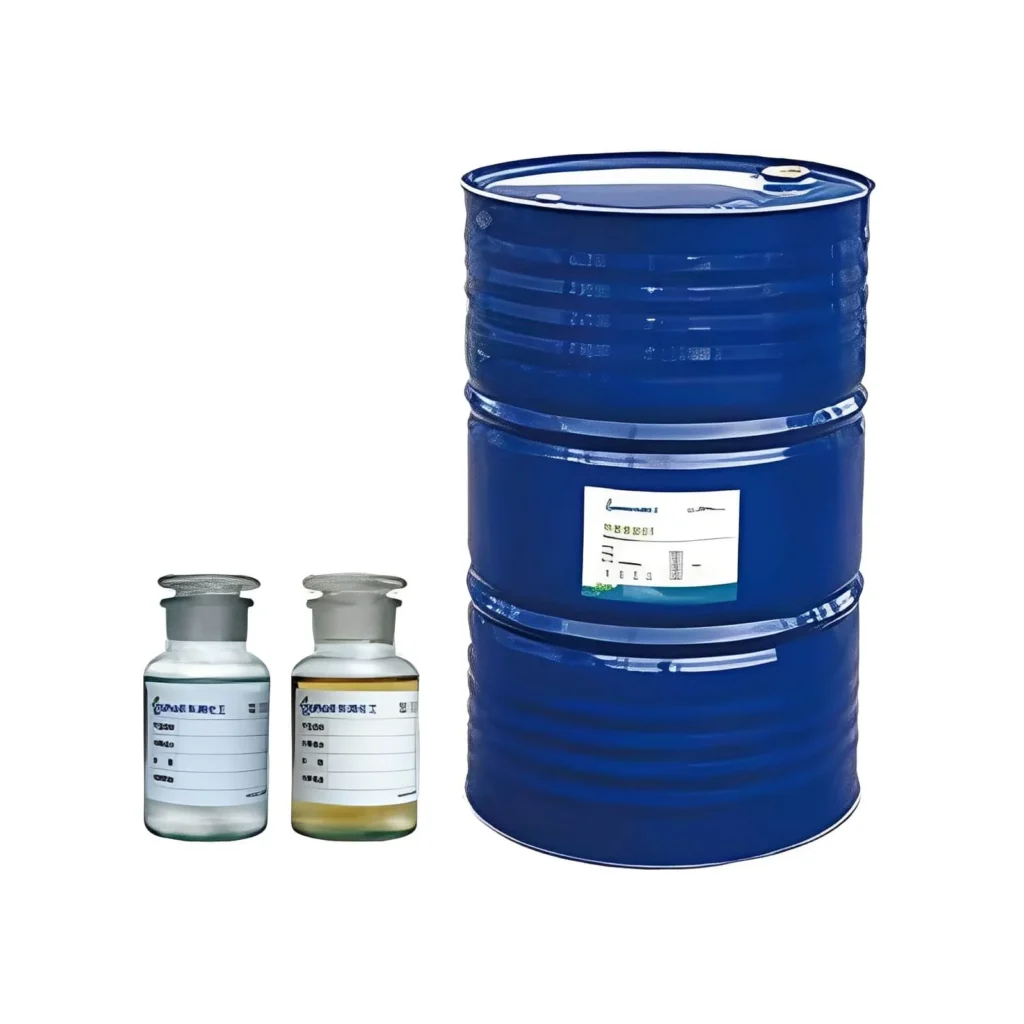
Let’s explore the cutting-edge ways surfactants are transforming manufacturing processes and why companies are investing in next-generation surfactant technologies.
1. What Makes Surfactants So Versatile
Surfactants (surface-active agents) have a dual nature — one end of the molecule loves water (hydrophilic), while the other repels it (hydrophobic). This property allows them to modify surfaces and interfaces, reducing tension and stabilizing mixtures.
Core Functions in Manufacturing
- Wetting: Enables uniform coating and adhesion
- Emulsifying: Mixes immiscible liquids like oil and water
- Dispersing: Prevents particle clumping in paints and fillers
- Foam control: Stabilizes or breaks foams as needed
- Lubrication: Reduces friction between solid surfaces
- Antistatic behavior: Improves safety in electronics and textiles
Modern industries exploit these mechanisms in increasingly creative ways — blending chemistry with engineering to improve both performance and sustainability.
2. Surfactants in Advanced Coating and Paint Systems
In coating formulations, surfactants play several critical roles beyond simple wetting.
Key Innovations
- Smart Wetting Agents: Tailored phosphate esters ensure uniform film formation on hydrophobic substrates like metal and plastic.
- Low-VOC Dispersants: Nonionic surfactants maintain pigment dispersion in waterborne coatings without heavy solvents.
- Corrosion-Resistant Additives: Acid phosphate esters chemically bond to metal surfaces, forming protective layers.
These innovations lead to faster drying, improved gloss, and longer-lasting coatings, especially in marine, automotive, and architectural applications.
Example:
Sunzo Foundation Engineering develops acid phosphate surfactant esters that combine corrosion inhibition, wetting, and adhesion — ideal for primers and industrial coatings.
3. Surfactants in Textile and Leather Processing
Textile and leather finishing relies heavily on surfactants for fiber penetration and dye uniformity.
Modern Applications
- Phosphate ester surfactants improve wetting in dense synthetic fibers.
- Cationic surfactants cURL Too many subrequests.
- cURL Too many subrequests. cURL Too many subrequests.
- Silicone surfactants cURL Too many subrequests.
cURL Too many subrequests. cURL Too many subrequests., cURL Too many subrequests.
cURL Too many subrequests. cURL Too many subrequests.
cURL Too many subrequests.
cURL Too many subrequests. cURL Too many subrequests. cURL Too many subrequests.
cURL Too many subrequests.
- cURL Too many subrequests. cURL Too many subrequests.
- cURL Too many subrequests. cURL Too many subrequests.
- cURL Too many subrequests. Amphoteric surfactants regulate gas bubble size in polyurethane foams.
- Dispersants for Fillers: Maintain uniform distribution of calcium carbonate or silica in plastics.
Example:
Sunzo’s isopropylphenyl phosphate (IPPP) acts as both a plasticizer and flame retardant, improving flexibility and fire performance in PVC and rubber systems.
5. Surfactants in Metalworking and Industrial Lubrication
Metal cutting, forming, and finishing processes depend on surfactants to reduce friction and prevent corrosion.
Innovative Functions
- Boundary Lubrication: Phosphate esters form protective films under pressure.
- Emulsifiable Fluids: Surfactants stabilize oil-in-water emulsions for machining and grinding.
- Pagpugong sa Korosyon: Acid phosphate surfactants neutralize metal ions on contact.
- Defoming Agents: Silicone-modified surfactants maintain fluid clarity and consistency.
These additive systems extend tool life, improve heat transfer, and reduce downtime — essential for precision manufacturing and heavy industries alike.
6. Surfactants in Electronics and Semiconductor Manufacturing
In electronics, even the smallest impurities can ruin performance. Surfactants are used for cleaning, photoresist coating, and surface modification at the micro-scale.
Applications Include:
- Micro-cleaning agents: Remove metal residues and organic films without damaging circuits.
- Antistatic surfactants: Prevent charge buildup during assembly.
- Wetting agents: Ensure even spreading of conductive or insulating films.
Breakthrough Innovation:
Ultra-pure, nonionic surfactants now support semiconductor fabrication, where cleanliness and precision define product yield.
7. Surfactants in Construction and Civil Engineering
Construction materials such as cement, concrete, and asphalt benefit from surfactant chemistry.
Key Roles
- Air entrainment: Improves concrete workability and freeze–thaw resistance.
- Wetting and dispersion: Enhance filler and pigment uniformity.
- Anti-foaming: Maintains flow during pumping and spreading.
- Dust suppression: Surfactant sprays capture airborne particulates in mining and construction.
cURL Too many subrequests. cURL Too many subrequests. cURL Too many subrequests.
cURL Too many subrequests.
cURL Too many subrequests.
cURL Too many subrequests.
- cURL Too many subrequests. cURL Too many subrequests.
- Bio-based phosphate esters cURL Too many subrequests.
- cURL Too many subrequests. cURL Too many subrequests.
- cURL Too many subrequests. cURL Too many subrequests.
cURL Too many subrequests. cURL Too many subrequests. cURL Too many subrequests.
cURL Too many subrequests.
cURL Too many subrequests. cURL Too many subrequests. that control particle growth and dispersion.
Modern Uses
- Nanoparticle synthesis: Surfactants regulate particle size and prevent agglomeration.
- Composite fabrication: Improve bonding between fibers and polymer matrices.
- Ceramic processing: Reduce surface tension to enhance sintering and coating uniformity.
These precision applications demand surfactants with high purity, controlled HLB values, and thermal stability.
Dive Deeper: How Formulators Select Surfactants
Choosing the right surfactant is a balance between chemistry and process conditions.
Selection Criteria
- Polarity (HLB value): Determines compatibility with water or oil systems.
- Temperature and pH stability: Critical for coatings, polymers, and hydraulic systems.
- Reactivity: Acid phosphate esters can bond to metal or resin systems.
- Environmental impact: Low-VOC, halogen-free, and biodegradable options are preferred.
- Synergistic effects: Often, mixtures of nonionic and anionic surfactants provide optimal results.
Formulators increasingly work with custom blends to achieve performance goals while maintaining eco-compliance.

Dive Deeper: Future Trends in Surfactant Innovation
The next generation of industrial surfactants will focus on smart functionality and environmental resilience.
Emerging Developments
- Self-healing coatings using reactive surfactant interfaces
- Smart surfactants that change polarity under pH or temperature shifts
- Hybrid phosphorus–silicon molecules for dual protection and lubrication
- Bio-based and enzyme-assisted synthesis for green chemistry production
Manufacturers like Sunzo Foundation Engineering ug Chempower Chemical are pioneering these transformations — integrating R&D, field testing, and sustainable sourcing into one streamlined model.
Kataposang mga Hunahuna
Surfactants are no longer background chemicals — they’re the connective tissue of modern manufacturing, cURL Too many subrequests.
cURL Too many subrequests.
cURL Too many subrequests. Sunzo Foundation Engineering cURL Too many subrequests. cURL Too many subrequests..
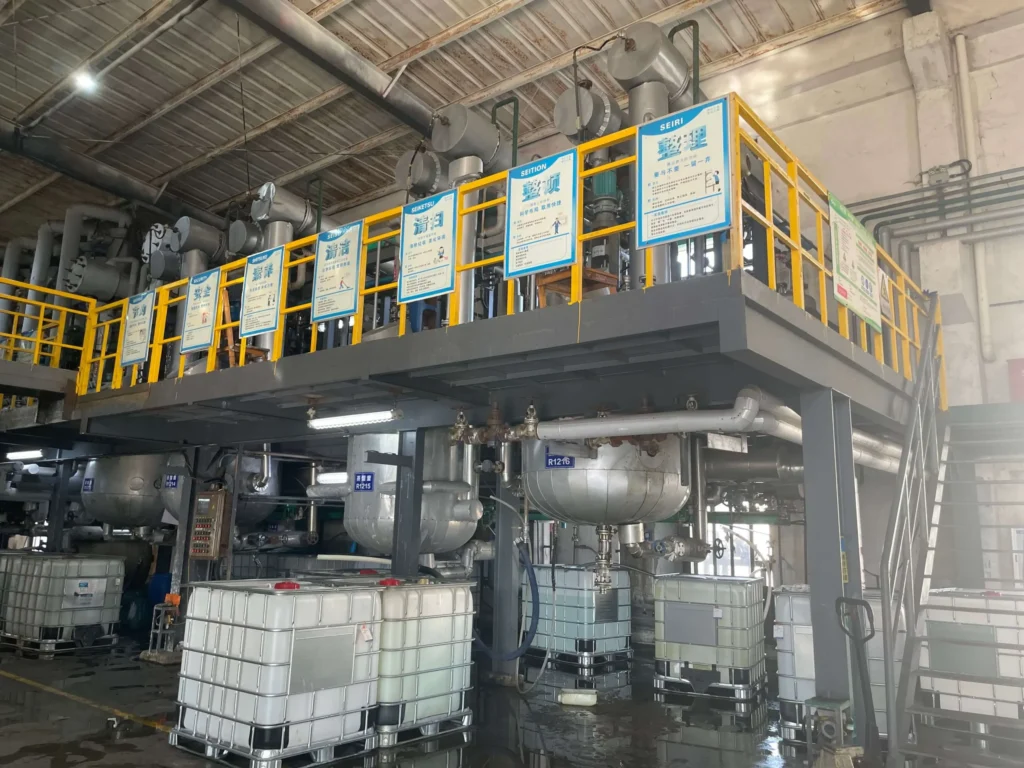
Kontaka ang Sunzo Foundation Engineering
cURL Too many subrequests.
📧 Email: dohollchemical@gmail.com
📱 WhatsApp: +86 139 0301 4781
 Cebuano
  English (United States)
  Russian
  German
  Turkish
  Spanish (Spain)
  Arabic
  French
  Vietnamese
  Indonesian
  Danish
  Japanese
  Bengali
  Greek
Greek  Tahitian
  Uzbek
Uzbek  English (Canada)
  Afrikaans
  Spanish (Venezuela)
  Bulgarian
  Assamese
  Tibetan
  Amharic
  South Azerbaijani
  Belarusian
  Czech
Czech  Spanish (Argentina)
  Catalan
  Italian
  Moroccan Arabic
  German (Austria)
  Spanish (Chile)
  Ukrainian