
pangunang paragrapo:
Surfactants are the hidden drivers of performance in coatings, textiles, and cleaning systems — but even the best formulation can fail if the concentration isn’t right.
snippet nga paragrapo:
To choose the right surfactant concentration, start by identifying your system type (aqueous or solvent-based), determine the cURL Too many subrequests., and perform stepwise testing to balance wetting, foaming, and stability. Most industrial systems use 0.2–1.0% surfactant concentration by total weight, depending on function and formulation type.

Transition nga paragrapo:
Surfactant concentration isn’t one-size-fits-all. Too little, and performance suffers; too much, and stability declines. In this guide, we’ll explore how to optimize dosage for maximum effect, with insights from Donghong Chemical’s phosphate ester surfactants, trusted worldwide for consistent performance.
Why Concentration Matters in Surfactant Performance
pangunang paragrapo:
A surfactant’s effectiveness depends on how it arranges itself at the interface — and that depends entirely on concentration.
snippet nga paragrapo:
When surfactants are dissolved, molecules migrate to the liquid interface until saturation. Beyond a certain limit, they self-assemble into micelles, which no longer reduce surface tension effectively. The concentration at this turning point is called the Critical Micelle Concentration (CMC).
Key Principles:
- Below CMC → Surface tension decreases rapidly (high efficiency).
- Near CMC → Interface fully covered; maximum wetting achieved.
- Above CMC → Excess surfactant forms micelles; limited further benefit.
Why It Matters:
Maintaining surfactant concentration slightly above the CMC gives optimal balance between wetting, emulsification, and cost-efficiency.
Typical Surfactant Concentration Ranges by Application
pangunang paragrapo:
Different applications demand different surfactant loads — the goal is to use only as much as necessary to achieve desired performance.
snippet nga paragrapo:
Below are general guidelines for concentration ranges across major industries.
| Aplikasyon | Surfactant Function | Typical Dosage (% by total weight) | Example Product |
|---|---|---|---|
| Textile Pre-Treatment | Wetting, scouring, emulsifying | 0.3–1.0 | AEO-3 Phosphate Ester |
| Dyeing & Finishing | Leveling, dispersion | 0.2–0.8 | NP-10 Phosphate Ester |
| Coatings & Paints | Wetting, anti-foam, pigment dispersion | 0.3–1.0 | AEO-3 / NP-10 |
| Lubricants | Anti-wear, corrosion inhibition | 0.1–0.5 | P204 / TBP |
| Flame Retardant Systems | cURL Too many subrequests. | cURL Too many subrequests. | cURL Too many subrequests. |
| cURL Too many subrequests. | cURL Too many subrequests. | cURL Too many subrequests. | cURL Too many subrequests. |
Note: cURL Too many subrequests.
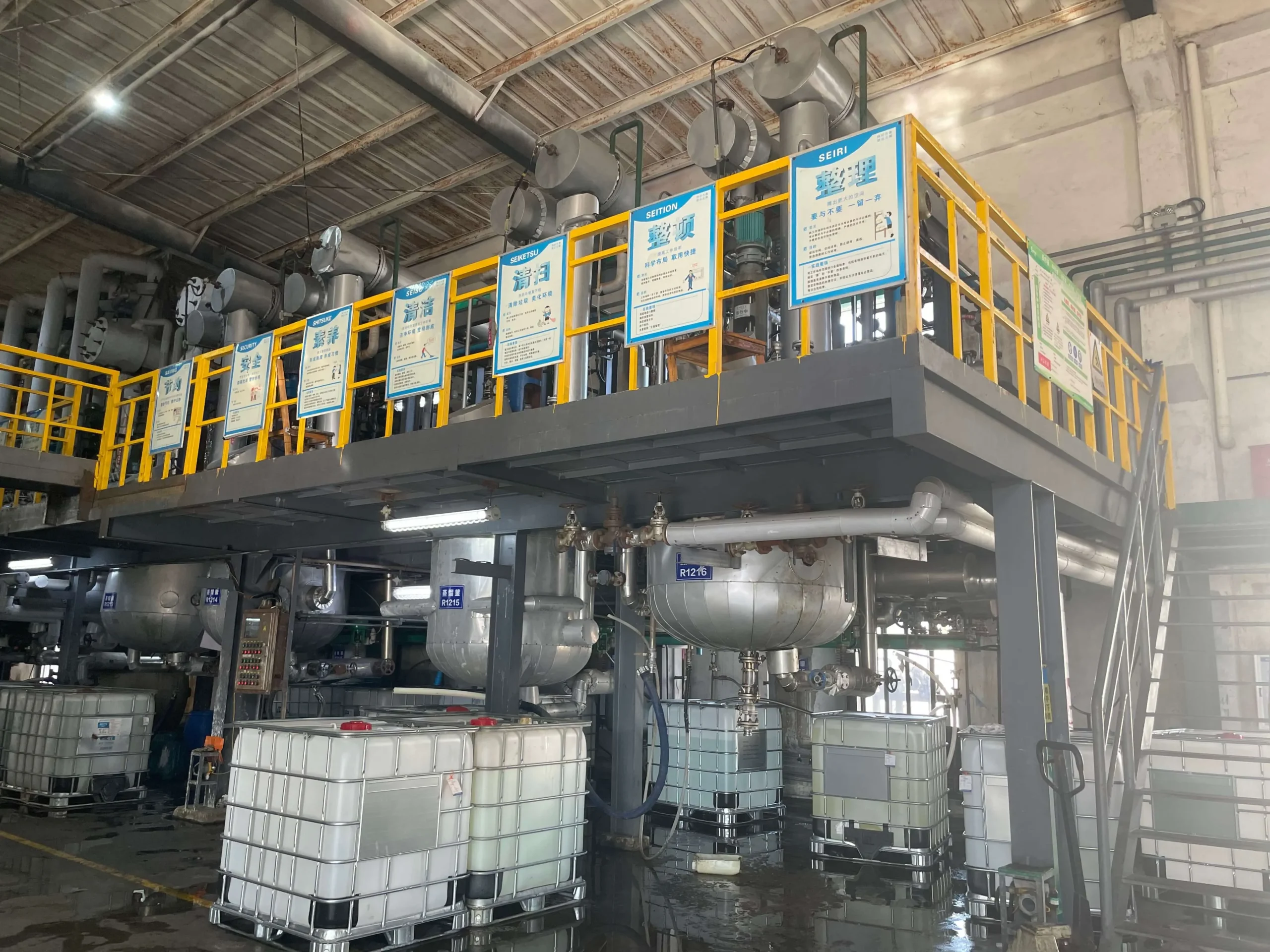
cURL Too many subrequests.
pangunang paragrapo:
cURL Too many subrequests.
snippet nga paragrapo:
Ang Critical Micelle Concentration (CMC) cURL Too many subrequests. cURL Too many subrequests. cURL Too many subrequests.
cURL Too many subrequests.
- cURL Too many subrequests. cURL Too many subrequests.
- cURL Too many subrequests. cURL Too many subrequests.
- cURL Too many subrequests. Detects micelle formation visually or instrumentally.
Influencing Factors:
- Temperature (higher temperature = higher CMC).
- Ionic strength of water (salts lower CMC).
- pH and presence of co-surfactants.
- Surfactant type (nonionic vs. anionic vs. amphoteric).
Donghong Chemical’s phosphate ester surfactants, such as AEO-3 ug NP-10, have low CMC values, offering excellent wetting and emulsifying power even at low concentrations — making them ideal for cost-sensitive industrial formulations.
Signs That Your Surfactant Concentration Is Too Low
pangunang paragrapo:
Under-dosing is a common mistake in formulation — and it shows in product performance.
snippet nga paragrapo:
Too little surfactant leads to poor interfacial coverage, leaving surfaces or pigments uncoated and unstable.
Indicators of Insufficient Concentration:
- Slow or uneven wetting on surfaces.
- Pigment agglomeration in coatings.
- Poor dye penetration in textiles.
- Weak emulsification or phase separation.
- Reduced corrosion resistance or lubrication effect.
In short, low concentration means wasted potential — your system isn’t fully activated.

Signs That Your Surfactant Concentration Is Too High
pangunang paragrapo:
If a little is good, more isn’t always better — excess surfactant can destabilize the system.
snippet nga paragrapo:
Overdosing surfactants can create foam, residue, and incompatibility with other formulation components.
Indicators of Over-Concentration:
- Persistent foam or aeration in processing.
- Increased viscosity or phase separation.
- Surface defects (craters, orange peel) in coatings.
- Residue on fibers or films after drying.
- Reduced gloss or color uniformity.
Pro Tip:
Once the CMC plateau is reached, increasing concentration brings diminishing returns. Save cost and stability by keeping dosage just above the effective limit.
Step-by-Step Method to Find the Right Concentration
pangunang paragrapo:
A systematic approach ensures that your surfactant dosage is optimized for both performance and cost.
snippet nga paragrapo:
Here’s how formulation chemists typically fine-tune surfactant concentration in new systems.
Step 1: Define Performance Goals
Decide the function — wetting, emulsification, dispersion, or anti-corrosion.
Step 2: Start at 0.3%
Begin with a low concentration (0.3% by total weight) and record performance metrics like surface tension, wetting time, or emulsion stability.
Step 3: Increase Gradually
Raise concentration in 0.1–0.2% increments until improvement plateaus.
cURL Too many subrequests.
cURL Too many subrequests.
cURL Too many subrequests.
cURL Too many subrequests.
Example:
cURL Too many subrequests. cURL Too many subrequests., cURL Too many subrequests. cURL Too many subrequests., cURL Too many subrequests.
cURL Too many subrequests.
pangunang paragrapo:
cURL Too many subrequests.
snippet nga paragrapo:
cURL Too many subrequests.
cURL Too many subrequests.
- cURL Too many subrequests. cURL Too many subrequests. uban cURL Too many subrequests. cURL Too many subrequests.
- cURL Too many subrequests. cURL Too many subrequests..
- Adjust ratios (e.g., 70:30 or 50:50) depending on desired performance.
- Re-test CMC of mixed systems — it’s often lower than individual CMCs.
Donghong Chemical’s phosphate ester series are designed for compatibility with nonionic and silicone-based surfactants, simplifying formulation development.
Why Surfactant Concentration Control Matters Economically
pangunang paragrapo:
Optimizing concentration isn’t just about chemistry — it’s about economics and sustainability.
snippet nga paragrapo:
Accurate dosing minimizes waste, improves performance, and reduces environmental impact. Overdosing increases cost, VOC emissions, and foam management issues.
Benefits of Optimal Concentration:
- Cost efficiency: Lower consumption without compromising results.
- Environmental compliance: Less chemical discharge and residue.
- Process stability: Consistent film formation and dyeing quality.
- Energy savings: Shorter mixing and washing times.
Using high-efficiency phosphate ester surfactants like AEO-3 or NP-10 allows formulators to achieve superior performance at lower concentrations — an advantage in both production and sustainability.
Why Choose Donghong Chemical for Reliable Surfactants
Donghong Chemical (Guangdong, China) is a global manufacturer of high-purity phosphate esters and surfactant additives trusted in coatings, textiles, and industrial processes.
cURL Too many subrequests.
- AEO-3 Phosphate Ester: cURL Too many subrequests.
- NP-10 Phosphate Ester: Dispersant and leveling agent.
- P204: Acidic phosphate ester for extraction and corrosion inhibition.
- TEP / TOP / TBP: Neutral esters for flame retardant and plasticizer systems.
cURL Too many subrequests.
- Purity ≥99%, color ≤30 APHA, acid value ≤0.3 mgKOH/g.
- ISO9001 / ISO14001 / REACH / RoHS certified.
- 20,000-ton annual capacity with advanced esterification systems.
- Global export service and technical consultation.
📧 Email: dohollchemical@gmail.com
📱 WhatsApp: +86 139 0301 4781
Conclusion: Precision Brings Performance
Choosing the right surfactant concentration means balancing chemistry, economy, and sustainability.
Start near the critical micelle concentration, observe performance changes, and fine-tune based on your formulation goals.
Uban sa Donghong Chemical’s high-purity phosphate ester surfactants, you can achieve peak efficiency at lower dosages — ensuring stable, clean, and cost-effective results across coatings, textiles, and industrial systems.
For formulation assistance or technical consultation:
📧 Email: dohollchemical@gmail.com
📱 WhatsApp: +86 139 0301 4781
Donghong Chemical — Leading global producer of high-purity phosphate esters and surfactants, helping industries optimize performance through chemistry and precision.
 Cebuano
  English (United States)
  Russian
  German
  Turkish
  Spanish (Spain)
  Arabic
  French
  Vietnamese
  Indonesian
  Danish
  Japanese
  Bengali
  Greek
Greek  Tahitian
  Uzbek
Uzbek  English (Canada)
  Afrikaans
  Spanish (Venezuela)
  Bulgarian
  Assamese
  Tibetan
  Amharic
  South Azerbaijani
  Belarusian
  Czech
Czech  Spanish (Argentina)
  Catalan
  Italian
  Moroccan Arabic
  German (Austria)
  Spanish (Chile)
  Ukrainian