
leading paragraph:
Every high-quality coating — from architectural paints to industrial primers — depends on a hidden ingredient that makes everything blend perfectly: the surfactant.
snippet paragraph:
A surfactant (short for “surface-active agent”) is a compound that reduces surface tension between liquids or between a liquid and a solid. In coatings, surfactants help disperse pigments, improve wetting, stabilize emulsions, and enhance the overall appearance and durability of the paint film.
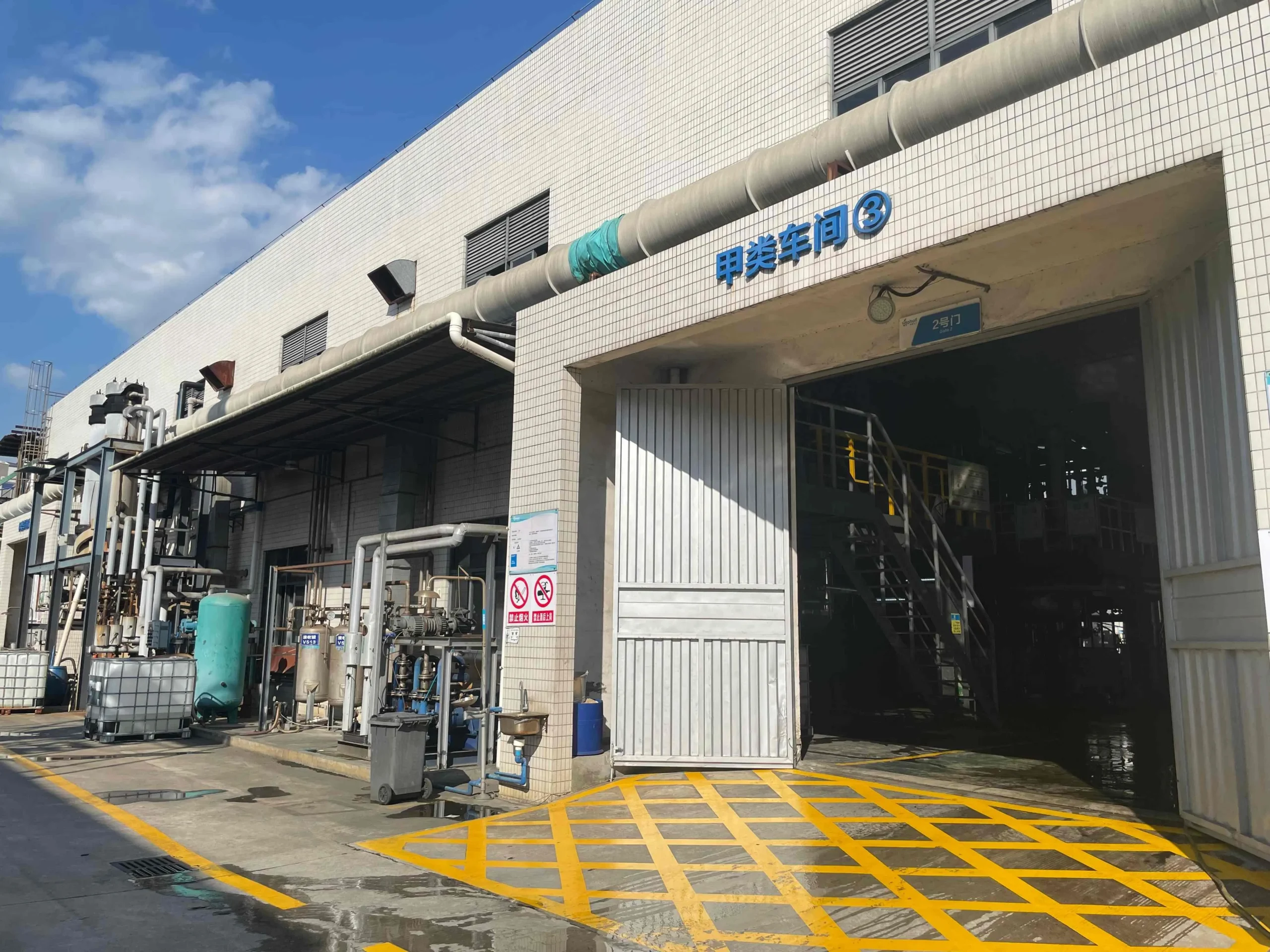
Transition paragraph:
Without surfactants, coatings would separate, foam uncontrollably, or fail to cover surfaces evenly. This article explains what surfactants are, how they work at the molecular level, and why phosphate ester surfactants — like those from Donghong Chemical — are critical in modern coating systems.
What Is a Surfactant?
leading paragraph:
At its core, a surfactant is a molecule with two opposite personalities.
snippet paragraph:
Each surfactant molecule has a hydrophilic head (water-loving) and a hydrophobic tail (oil-loving). This dual nature allows surfactants to act as a bridge between substances that normally don’t mix — such as water and organic resins in coating formulations.
Basic Structure:
- Hydrophilic (Polar) Group: Attracts water molecules.
- Hydrophobic (Non-Polar) Tail: Attracts oils, resins, or pigments.
By aligning themselves at interfaces, surfactants lower surface tension and create a uniform, stable mixture — essential for both waterborne and solvent-based coatings.

How Surfactants Work in Coating Formulations
leading paragraph:
The magic of surfactants lies in how they influence surface tension and particle interaction.
snippet paragraph:
When added to a paint or coating formulation, surfactants reduce the energy required for wetting, dispersion, and stabilization. They ensure pigments spread evenly, films flow smoothly, and the product remains stable over time.
Key Mechanisms:
- Wetting:
Surfactants help the coating spread uniformly over the substrate by reducing surface tension.
→ Result: Improved adhesion and coverage. - Dispersion:
Surfactants surround pigment and filler particles, preventing them from clumping together.
→ Result: Stable color, smooth texture, and higher gloss. - Emulsification:
In waterborne systems, surfactants keep resin droplets evenly dispersed in water.
→ Result: Stable emulsions that don’t separate during storage. - Leveling and Flow:
Surfactants improve surface smoothness by preventing craters, orange peel, and brush marks.
→ Result: Better film uniformity and visual appeal. - Anti-Static and Anti-Corrosive Effects (Phosphate Esters):
The phosphate group can bond to metal substrates, forming protective films that resist corrosion.
In short: surfactants make coatings more efficient, more stable, and more beautiful.
Different Types of Surfactants Used in Coatings
leading paragraph:
Not all surfactants behave the same — their chemistry defines their role.
snippet paragraph:
Surfactants are classified by the electrical charge of their hydrophilic group. The type you choose affects compatibility, pH stability, and foaming behavior.
| Type | Charge | Common Use in Coatings | Example Compounds |
|---|---|---|---|
| Anionic | Negative | Wetting and dispersing agents | Phosphate esters (AEO-3, NP-10) |
| Nonionic | None | Emulsifiers, leveling agents | Fatty alcohol ethoxylates |
| Cationic | Positive | Anti-static, adhesion promoters | Quaternary ammonium compounds |
| Amphoteric | Dual (positive/negative) | Mild, pH-stable emulsifiers | Betaine-based surfactants |
Phosphate ester surfactants, such as AEO-3 and NP-10 from Donghong Chemical, are among the most versatile types because they combine excellent surface activity with chemical stability under both acidic and alkaline conditions.

The Role of Phosphate Ester Surfactants in Coatings
leading paragraph:
Among all surfactant types, phosphate esters stand out for their balance of performance, stability, and safety.
snippet paragraph:
Phosphate esters are organic compounds formed by reacting phosphoric acid with alcohols or ethoxylated alcohols. They have a unique ability to act as both anionic and nonionic surfactants, giving them exceptional versatility in coating systems.
Functions in Coating Applications:
- Wetting Agent: Helps the paint penetrate and adhere to the substrate.
- Dispersant: Prevents pigment aggregation and flocculation.
- Anti-Corrosion Additive: Creates phosphate-metal bonds that protect the substrate.
- Leveling Agent: Improves gloss and smoothness.
- Emulsion Stabilizer: Ensures long-term storage stability.
Advantages of Phosphate Ester Surfactants:
- Low foaming, ideal for high-speed mixing.
- Excellent acid–alkali resistance.
- Compatible with various resin systems (acrylic, epoxy, PU).
- Biodegradable and APEO-free.
Donghong Chemical’s AEO-3 and NP-10 phosphate esters are used worldwide in architectural, automotive, and industrial coatings for their stability and performance.
How Surfactants Affect Paint Performance
leading paragraph:
A good surfactant can make a paint easy to apply and long-lasting — but the wrong one can ruin it.
snippet paragraph:
Surfactant concentration, type, and purity all influence key paint properties such as gloss, leveling, adhesion, and water resistance.
| Property | Effect of Surfactant | Result |
|---|---|---|
| Wetting and Spreading | Lowers surface tension | Better coverage and adhesion |
| Color Strength | Improves pigment dispersion | Richer, more uniform color |
| Gloss and Leveling | Enhances film flow | Smooth, defect-free finish |
| Foaming Control | Low-foam surfactants prevent defects | Stable surface without craters |
| Storage Stability | Keeps emulsion uniform | Longer shelf life |
| Corrosion Resistance | Phosphate bonding effect | Increased substrate protection |
Important Tip:
In coatings, surfactants should be added in the correct proportion (0.3–1.0%) — too much can cause foam or water sensitivity, while too little leads to poor pigment dispersion.
Dive Deeper: Surfactant Dosage Optimization in Coatings
To achieve ideal coating stability and performance:
- Start Low: Begin with 0.3–0.5% based on total paint weight.
- Evaluate Compatibility: Check with resin type and pigment volume.
- Monitor pH Stability: Phosphate esters remain stable from pH 3 to 9.
- Check Film Appearance: Adjust surfactant content to eliminate flow defects.
- Use Blends: Combine anionic and nonionic types for broader performance.
Donghong Chemical provides custom surfactant blends designed for waterborne and solvent-based coatings, ensuring consistent film quality and gloss retention.
Why High-Purity Surfactants Matter
leading paragraph:
The performance of a surfactant depends not only on its chemistry but also on its purity and manufacturing precision.
snippet paragraph:
Impurities can increase foam, destabilize pigments, or cause yellowing. That’s why high-purity (≥99%) phosphate esters from Donghong Chemical are trusted worldwide for advanced coatings.
Quality Parameters:
- Purity ≥99%
- Acid Value ≤0.3 mgKOH/g
- Color ≤30 APHA (water-clear)
- Moisture ≤0.1%
- Excellent batch-to-batch consistency
Donghong Chemical’s Quality Advantage:
- Fully automated esterification and filtration systems.
- Closed-loop solvent recovery (>95% efficiency).
- ISO9001 and ISO14001 certified production.
- REACH & RoHS compliance for EU exports.
Conclusion: Surfactants — The Science Behind Perfect Coatings
Surfactants are the invisible engineers of the coating world — ensuring smooth application, bright color, and long-term stability.
Among them, phosphate ester surfactants offer unmatched versatility, combining wetting, dispersing, and anti-corrosion functions in a single molecule.
By choosing high-purity surfactants from Donghong Chemical, coating manufacturers gain consistent performance, regulatory compliance, and sustainability — all essential for modern formulations.
For product inquiries, technical data, or sample requests:
📧 Email: dohollchemical@gmail.com
📱 WhatsApp: +86 139 0301 4781
Donghong Chemical — Trusted manufacturer of phosphate esters and surfactant additives for coatings, textiles, and industrial applications worldwide.
 Spanish (Argentina)
  English (United States)
  Russian
  German
  Turkish
  Spanish (Spain)
  Arabic
  French
  Vietnamese
  Indonesian
  Danish
  Japanese
  Bengali
  Greek
Greek  Tahitian
  Uzbek
Uzbek  English (Canada)
  Afrikaans
  Spanish (Venezuela)
  Bulgarian
  Assamese
  Tibetan
  Cebuano
  Amharic
  South Azerbaijani
  Belarusian
  Czech
Czech  Catalan
  Italian
  Moroccan Arabic
  German (Austria)
  Spanish (Chile)
  Ukrainian