Ir al contenido
Phosphate esters are essential industrial chemicals used in coatings, lubricants, textiles, and flame retardant systems. With global demand for high-performance and eco-friendly additives on the rise, starting a phosphate ester distribution business can be both profitable and strategically valuable — especially as industries move toward sustainable chemistry.
To start a phosphate ester distribution business, you need to build supplier relationships, secure certifications, manage chemical logistics safely, and focus on target industries such as coatings, lubricants, and construction materials.
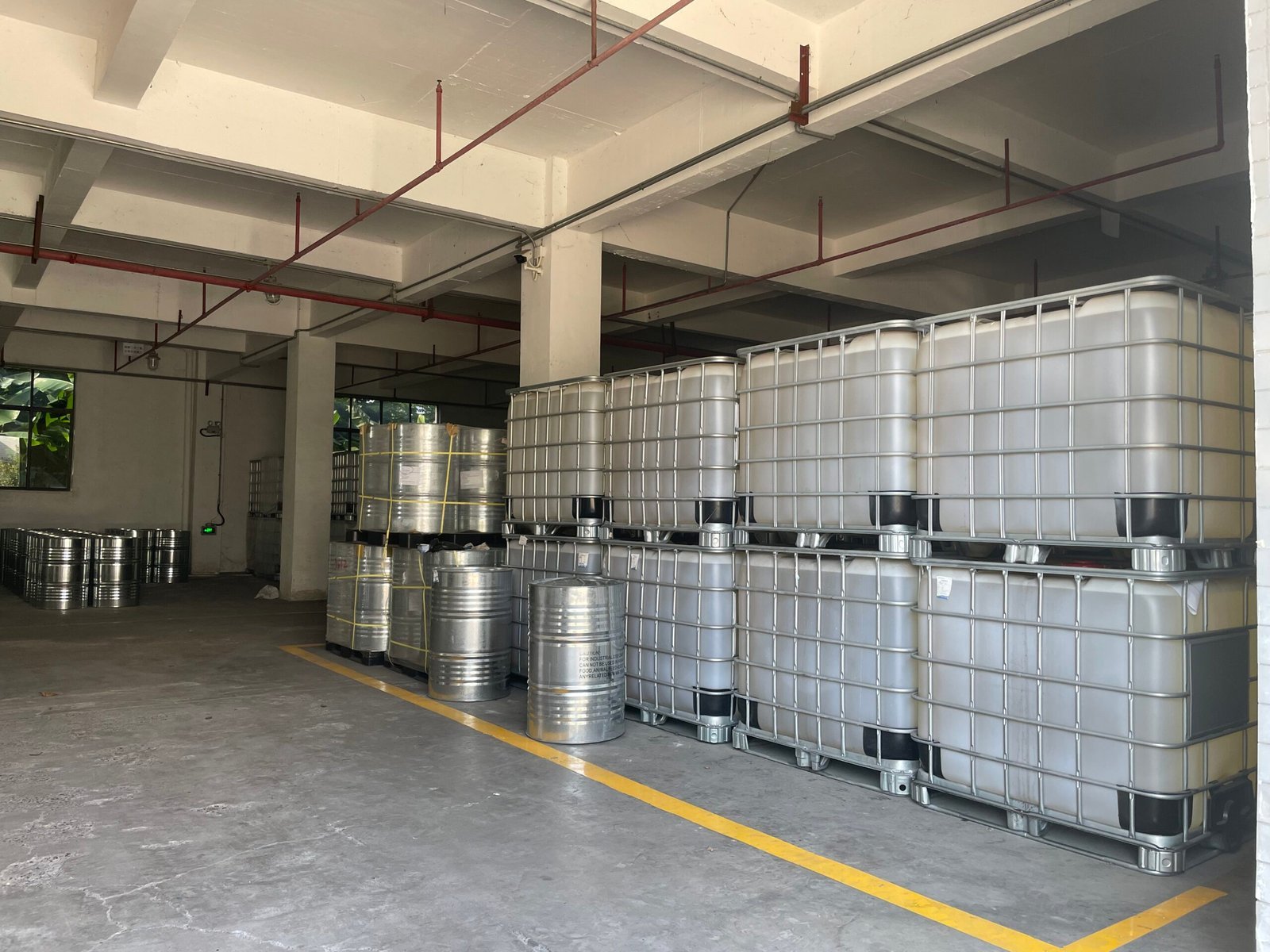
This guide walks you through each step — from understanding the market to building partnerships and managing compliance — so you can confidently enter the phosphate ester trade.
1. Understand the Phosphate Ester Market
Before investing in stock or infrastructure, you must first understand how phosphate esters are used and who buys them.
Key Application Areas
| Industry | Use of Phosphate Esters | Product Examples |
|---|---|---|
| Coatings & Paints | Dispersants, wetting agents, flame retardants | Acid phosphate esters, alkyl aryl esters |
| Lubricants & Hydraulic Fluids | Anti-wear, fire resistance, corrosion control | TCP, IPPP, TPP |
| Plastics & Rubber | Plasticizers and flame retardants | TEHP, TBP |
| Textile & Leather | Penetrants, anti-static, softeners | Phosphate surfactants |
| Construction & Engineering | Surface treatment, emulsifiers, corrosion inhibitors | Polymeric phosphate esters |
Market Insights
- Global phosphate ester demand exceeds $1.5 billion annually, with steady growth at 4–5% per year.
- Asia-Pacific, particularly China and India, dominate production and export.
- Rising environmental regulations drive demand for halogen-free, low-VOC phosphate esters.
Understanding where these esters fit into value chains will help you target the right buyers and manufacturers.
2. Choose Your Distribution Model
Your business model determines how you position yourself in the market.
a. Wholesale Distribution
Buy large quantities from manufacturers and resell to factories, blenders, or smaller distributors.
Pros: Higher margins, long-term contracts.
Cons: Requires higher working capital and storage facilities.
b. Regional Agent or Importer
Represent international brands locally and handle sales, logistics, and after-sales service.
Pros: Lower investment and built-in supplier credibility.
Cons: Dependent on exclusive agreements.
c. Niche or Specialty Supplier
Focus on one or two key applications, such as coatings or lubricants, offering technical guidance and custom blending.
Pros: High-value relationships, easier brand building.
Cons: Requires deeper technical expertise.
3. Build Relationships with Reliable Suppliers
Finding trustworthy producers is the cornerstone of your business. Partnering with certified, export-ready manufacturers ensures consistent quality and delivery.
Top Chinese Manufacturers
| Company | Specialty | Export Strength |
|---|---|---|
| Sunzo Foundation Engineering | Coating-grade and industrial phosphate esters | ✅ Strong export & custom formulation |
| Taishi Chemical Co., Ltd. | Triaryl phosphate esters (TCP, IPPP, TPP) | ✅ REACH certified |
| Chempower Chemical Co., Ltd. | Eco-friendly, halogen-free phosphate esters | ✅ Sustainable focus |
| Jindun Chemical Co., Ltd. | Fire-resistant fluids and lubricants | ✅ ISO-certified production |
| Chengxing Phosph-Chemicals Co., Ltd. | Large-scale phosphate esters & intermediates | ✅ Full supply chain integration |
Tip: Always request product specifications, COA (Certificate of Analysis), and MSDS documents before entering into distribution contracts.
Sunzo Foundation Engineering is particularly suitable for new distributors — providing:
- Custom formulation support
- Export documentation
- Packaging flexibility (200L drums, 1000L IBC tanks)
- Technical marketing assistance
📧 dohollchemical@gmail.com
📱 +86 139 0301 4781
4. Secure Business Licenses and Certifications
Chemical distribution is a regulated industry. Compliance builds credibility and prevents costly legal issues.
Common Requirements
- Business Registration: Register under your local commerce authority.
- Chemical Trading License: Required in most countries for handling industrial chemicals.
- Environmental Safety Permit: For warehousing and waste management.
- Import/Export License: For cross-border trading.
- ISO 9001 / 14001 Certification: Boosts trust with international clients.
Optional but Valuable
- REACH or RoHS familiarity: For EU and global compliance.
- Hazardous Material Training (HAZMAT): For your handling staff.
Regulations vary by country, but following international standards from the start signals professionalism.
5. Establish a Reliable Supply Chain
Chemical logistics require precision — even small mistakes can result in contamination or losses.
Storage Guidelines
- Use sealed steel or HDPE drums with nitrogen blanketing for moisture-sensitive esters.
- Maintain temperature between 10–35°C to avoid hydrolysis.
- Store away from strong acids, alkalis, and oxidizers.
Transportation Tips
- Partner with certified chemical freight companies.
- Use UN-rated containers for export.
- Label all drums with GHS symbols and handling instructions.
Efficient logistics not only reduce risk but also improve client trust and reorder frequency.
6. Develop a Technical Sales Strategy
Phosphate esters are specialty chemicals — selling them requires technical understanding, not just pricing.
Build Industry-Specific Solutions
| Target Sector | Selling Point | Example Product |
|---|---|---|
| Coating Manufacturers | Improved dispersion and flame retardancy | Acid phosphate ester |
| Lubricant Blenders | Anti-wear, oxidation stability | Triaryl phosphate esters |
| Plasticizers and Rubber Compounds | Flexibility and fire resistance | TEHP, IPPP |
| Textile Mills | Enhanced wetting and anti-static behavior | Phosphate surfactants |
Marketing Tools:
- Provide sample kits and technical datasheets.
- Offer formulation guidance or lab testing.
- Build a website with TDS and SDS downloads.
- Attend industrial trade fairs (ChinaCoat, CHINAPLAS, AOCS, etc.).
Your goal is to become a technical partner, not just a supplier.
7. Manage Finance and Inventory Wisely
Chemical distribution is capital-intensive — you’ll need to balance cash flow, inventory, and credit risk.
Best Practices
- Start with 2–3 fast-moving grades (e.g., IPPP, TPP, acid ester).
- Use consignment or pre-order models to minimize storage cost.
- Keep detailed inventory records by batch number and date.
- Offer flexible MOQs for regional buyers to build loyalty.
Tip: Negotiate 90-day supplier payment terms and 30–45-day buyer credit periods for smoother cash flow.
8. Prioritize Health, Safety, and Environment (HSE)
Your facility should comply with international chemical handling standards.
Safety Essentials
- Install spill containment and fire suppression systems.
- Train staff in MSDS interpretation and emergency response.
- Equip workers with PPE — gloves, goggles, respirators.
- Label all storage units per GHS (Globally Harmonized System).
An HSE-compliant facility not only avoids accidents but also attracts responsible clients and suppliers.
9. Build Brand Credibility and Partnerships
Once your operations are stable, focus on building a reputation as a trusted technical distributor.
Key Strategies
- Develop long-term supplier contracts (preferably exclusive).
- Offer co-branded marketing with manufacturers.
- Maintain strong after-sales support.
- Publish case studies and performance data.
Distributors who provide value-added technical services tend to outlast price-only traders.
Dive Deeper: Why Phosphate Esters Are Ideal for Distribution
Phosphate esters are among the most stable and versatile specialty chemicals, offering:
- Long shelf life (2–5 years).
- High-value density (compact for storage and transport).
- Multiple market applications.
- Steady year-round demand.
They are ideal for small and medium distributors entering the industrial chemicals market because they combine manageable risk with strong growth potential.

Dive Deeper: Partnering with Sunzo Foundation Engineering
Sunzo Foundation Engineering supports global distributors by providing:
- Technical product data and lab support.
- Export-ready documentation (COA, SDS, customs files).
- Private labeling and customized blending.
- Logistics coordination via Chinese ports (Shenzhen, Shanghai, Qingdao).
Their phosphate ester product lines include:
- Triphenyl Phosphate (TPP)
- Tricresyl Phosphate (TCP)
- Isopropylphenyl Phosphate (IPPP)
- Acid Phosphate Esters (mono/di)
- Custom blended surfactant-phosphate systems
This partnership gives new distributors a head start with proven chemistry, consistent quality, and technical reliability.

Final Thoughts
Starting a phosphate ester distribution business isn’t just about buying and reselling chemicals — it’s about connecting industrial chemistry with practical applications. Success comes from building trusted relationships, maintaining regulatory compliance, and providing technical value to customers.
As industries shift toward eco-friendly and fire-resistant materials, distributors who align with sustainable suppliers like Sunzo Foundation Engineering will lead the next decade of growth.
Contact Sunzo Foundation Engineering
For wholesale phosphate esters, export partnerships, or distribution collaboration:
📧 Email: dohollchemical@gmail.com
📱 WhatsApp: +86 139 0301 4781
 Spanish (Chile)
  English (United States)
  Russian
  German
  Turkish
  Spanish (Spain)
  Arabic
  French
  Vietnamese
  Indonesian
  Danish
  Japanese
  Bengali
  Greek
Greek  Tahitian
  Uzbek
Uzbek  English (Canada)
  Afrikaans
  Spanish (Venezuela)
  Bulgarian
  Assamese
  Tibetan
  Cebuano
  Amharic
  South Azerbaijani
  Belarusian
  Czech
Czech  Spanish (Argentina)
  Catalan
  Italian
  Moroccan Arabic
  German (Austria)
  Ukrainian